6 Things St. Louis Property Managers Should Do Before Winter Hits
St. Louis weather doesn't ease into winter — it lurches. One week you're running the AC, the next you're scraping frost off your windshield. For commercial roofs, that swing from warm days to freezing nights is exactly when small problems turn into expensive ones.
Fall is the window to catch those problems while contractors still have availability and temperatures are mild enough for repairs to cure and seal properly. Wait until the first hard freeze and you're stuck choosing between an emergency tarp and a very long, very cold wait for a fix.
Here's what property managers and building owners across the St. Louis metro should be doing right now, before the leaves finish falling.
1. Schedule a Full Roof Inspection
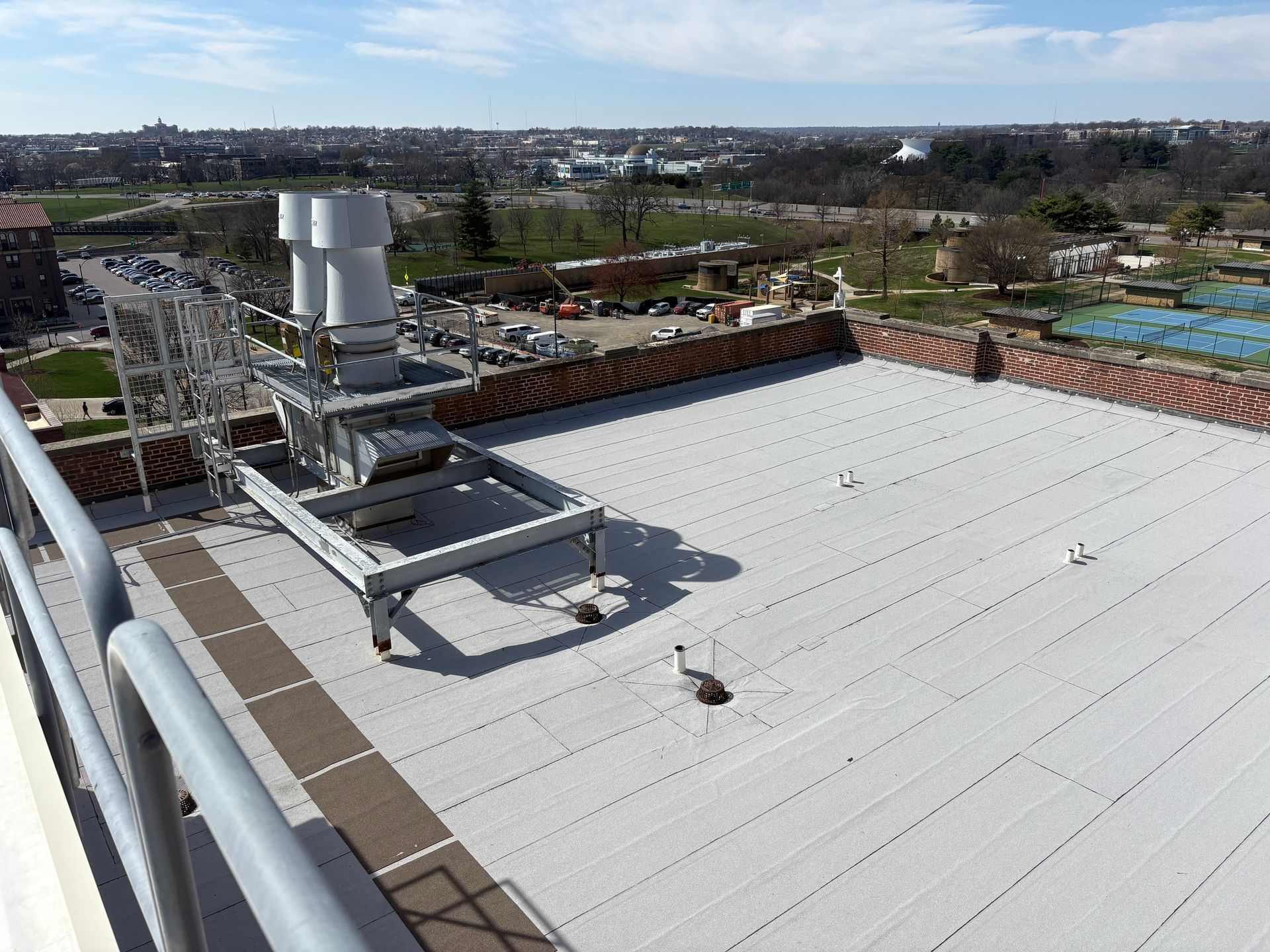
A fall inspection should happen before the first freeze, not after the first leak. A qualified roofing contractor will check for:
• Cracked, blistered, or lifting membrane
• Deteriorated flashing around HVAC units, vents, and roof edges
• Soft spots or ponding water that signal trapped moisture
• Loose or missing fasteners
• Seams that have started to separate
Anything found now can usually be repaired in a single visit. The same issue discovered in January, under snow and ice, often turns into an emergency call.
2. Clear Drains, Gutters, and Scuppers
Flat and low-slope commercial roofs rely entirely on drains and scuppers to move water off the surface. Fall foliage clogs them fast, and a blocked drain doesn't announce itself — it just quietly lets water pool until it finds a weak point in the membrane.
Before winter, every drain, gutter, downspout, and scupper on the property should be cleared of leaves, sticks, and granules. This is especially important for buildings near mature trees, which describes a lot of the commercial properties around Kirkwood, Webster Groves, and the greater St. Louis suburbs.
3. Seal Small Issues Before the Freeze-Thaw Cycle Starts
Water that gets into even a hairline crack or seam gap will freeze, expand, and widen that opening over the course of the winter. What starts as a minor patch job in October can become a full membrane repair — or a ceiling leak — by February.
Fall is the last practical window to apply sealants and coatings, since most roofing materials need temperatures above roughly 40–50°F to cure correctly. Once St. Louis settles into its winter pattern, those repair options narrow considerably.
4. Check Rooftop Equipment and Penetrations
HVAC units, exhaust fans, satellite mounts, and conduit runs are the most common source of roof leaks — not because the roofing material fails, but because the flashing and sealant around the equipment does. Fall is a good time to have both your roofer and your HVAC contractor confirm that curbs, boots, and seals around every rooftop penetration are intact before that equipment runs hard through winter.
5. Trim Back Overhanging Branches
Branches that hang over the roofline do double duty as a maintenance headache: they drop debris into drains all season, and in an ice storm they become a direct threat to the roof surface itself. Trimming back anything overhanging the building now is cheap insurance against both problems.
6. Review Your Roof's Warranty and Maintenance Records
Fall is also a good time for a paperwork check. Confirm that your roof's warranty is still active, that any required manufacturer inspections have been completed and documented, and that you have a record of repairs made this year. If a claim ever becomes necessary, missing documentation is one of the most common reasons a warranty claim gets denied or delayed.
Why This Matters for St. Louis Buildings Specifically
St. Louis sits in a climate zone that gets real winter — ice, snow, and sustained sub-freezing stretches — layered on top of the freeze-thaw cycling that's especially hard on roofing membranes. A roof that goes into winter with unresolved issues doesn't just risk a leak; it risks that damage compounding every time the temperature crosses freezing and back.
Property managers who schedule fall maintenance consistently tend to see fewer emergency calls in January and February, and they get more useful life out of the roofing system overall — which matters when a full commercial roof replacement is a five- or six-figure capital expense.
Don't Wait for the First Freeze
Roofing contractors book up fast once the weather turns, and once temperatures drop below the range where sealants and coatings cure properly, your repair options get more limited and more expensive. The property managers who call in October get ahead of the line. The ones who call after the first ice storm get in line behind everyone else.
Ready to get your roof winter-ready? Taylor Roofing has been serving commercial properties across the St. Louis metro for over a century. Contact us today to schedule your fall roof inspection before the season books up.