A Year-Round Guide for Building Owners & Property Managers
If you own or manage a commercial building in the St. Louis metro area, you already know our weather can be unpredictable. From ice storms in January to 100-degree heat indexes in July, the Gateway City throws just about everything at your roof over the course of a single year.
That constant cycle of temperature swings, moisture, wind, and UV exposure takes a real toll on commercial roofing systems. Understanding when and how our local climate affects your roof can help you stay ahead of costly damage and extend your roof’s lifespan by years.
Here’s a season-by-season breakdown of what St. Louis weather does to commercial roofs—and what you can do about it.
Winter (December – February): Freeze-Thaw Cycles & Ice Damage
The Challenge
St. Louis winters are defined by the freeze-thaw cycle. Temperatures can swing from the mid-40s to well below freezing in a matter of hours. When water seeps into small cracks or seams in your roofing membrane and then freezes, it expands—widening those gaps every time. Over the course of a winter, this repeated expansion and contraction can compromise even well-maintained roofing systems.
Ice dams are another concern, especially on low-slope commercial roofs where drainage may already be limited. When snow melts on a warmer section of the roof and refreezes at the edges or around drains, water can back up under the membrane and cause interior leaks.
What You Should Do
• Schedule a professional roof inspection before winter arrives (ideally in late October or November) to catch any vulnerabilities.
• Clear drains, scuppers, and gutters of debris so water and snowmelt can flow freely.
• After any significant snow or ice event, have your roof checked for ponding water or membrane damage.
• Never attempt to chip ice off a commercial roof—this can puncture or tear the membrane. Call a professional.
Spring (March – May): Severe Storms, Hail & Heavy Rain
The Challenge
Spring in the St. Louis metro area brings the region’s most intense storm season. Thunderstorms, hail, and high winds are common from March through May. The metro east and greater St. Louis area sit right in the path of severe weather systems that move through the Midwest each spring.
Hail is the single most damaging weather event for commercial roofs. Even small hailstones can bruise or puncture single-ply membranes like TPO and EPDM, while larger hail can crack and dislodge modified bitumen or built-up roofing. Wind damage often accompanies hail, lifting flashings, tearing seams, and blowing debris onto the roof surface.
Heavy spring rains test your drainage system. If your roof has even minor ponding issues, weeks of rain can accelerate deterioration and lead to leaks.
What You Should Do
• After every major storm, get a professional inspection. Hail damage isn’t always visible from the ground and can go undetected for months.
• Document any damage with photos and file insurance claims promptly. Most commercial policies have time limits for reporting storm damage.
• Ensure your roof’s drainage system is functioning properly—clogged drains are the number one cause of avoidable spring leaks.
• If your building has rooftop HVAC units, have them secured and inspect the curbing and flashing around them.
Summer (June – August): Extreme Heat, UV Exposure & Thermal Shock
The Challenge
St. Louis summers are brutally hot and humid. Temperatures regularly climb into the 90s, and heat index values above 100°F are common from mid-June through August. Your commercial roof absorbs the brunt of that heat every single day.
UV radiation breaks down roofing materials over time, causing membranes to become brittle and lose their flexibility. Dark-colored roofs absorb even more heat, which accelerates this degradation. On a typical St. Louis summer day, a commercial roof surface can reach 150–170°F.
Thermal shock is another major concern. When a sudden afternoon thunderstorm drops heavy rain on a superheated roof, the rapid temperature change can cause the membrane to crack or split, especially at seams and around penetrations.
What You Should Do
• Schedule a mid-summer inspection (July is ideal) to catch UV damage and thermal cracking before they become leaks.
• Consider reflective or light-colored roofing membranes when it’s time to re-roof—these can reduce roof surface temperatures by up to 60°F and lower your cooling costs.
• Check all seams, flashings, and penetration points for signs of separation or cracking.
• Make sure your rooftop HVAC equipment is draining properly and not creating moisture pools on the membrane.
Fall (September – November): The Critical Prep Window
The Challenge
Fall in St. Louis is deceptively pleasant weather-wise, which leads many building owners to take their foot off the gas when it comes to roof maintenance. That’s a mistake. Fall is your last window to address any issues before winter’s freeze-thaw cycles and spring’s storm season put maximum stress on your roofing system.
Falling leaves and debris accumulate quickly on flat commercial roofs and in drainage systems. If not cleared, they block drains and create ponding water that can freeze when temperatures drop in November and December.
What You Should Do
• This is the most important time of year for a comprehensive roof inspection. Address any repairs before winter.
• Clear all drains, gutters, scuppers, and downspouts of leaves and debris—check them monthly through leaf season.
• Trim any overhanging tree branches that could break under ice loads and damage your roof.
• Verify that all flashings, caulking, and sealants are in good condition—these are the first things to fail in freezing temperatures.
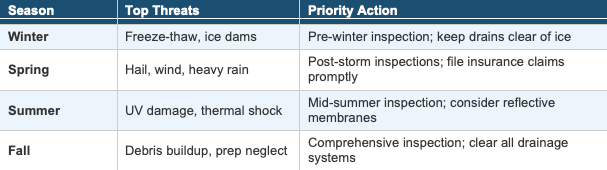
Year-Round Quick Reference
Why Local Roofing Expertise Matters
Not every commercial roofing company understands the specific demands that St. Louis weather places on a roof. A contractor from another region might not appreciate how our rapid temperature swings stress seams differently than a climate with more gradual seasonal transitions. They might not know that St. Louis’s spring hail season requires different inspection protocols than wind-only markets.
Taylor Roofing has been protecting commercial buildings in the St. Louis metro and Southern Illinois area since 1905. With over a century of experience working in this specific climate, we’ve seen how every type of weather event affects every type of commercial roofing system. That knowledge informs everything we do—from the materials we recommend to the maintenance schedules we design for our clients.
Protect Your Investment Year-Round
The best time to address roof issues is before they become emergencies. Whether you need a seasonal inspection, storm damage repair, or a long-term maintenance plan, our team is here to help.
Contact Taylor Roofing today at (618) 233-2424 or visit us at taylorroof.com to schedule your free roof evaluation.
Serving the entire St. Louis metro area, Metro East, and Southern Illinois since 1905.