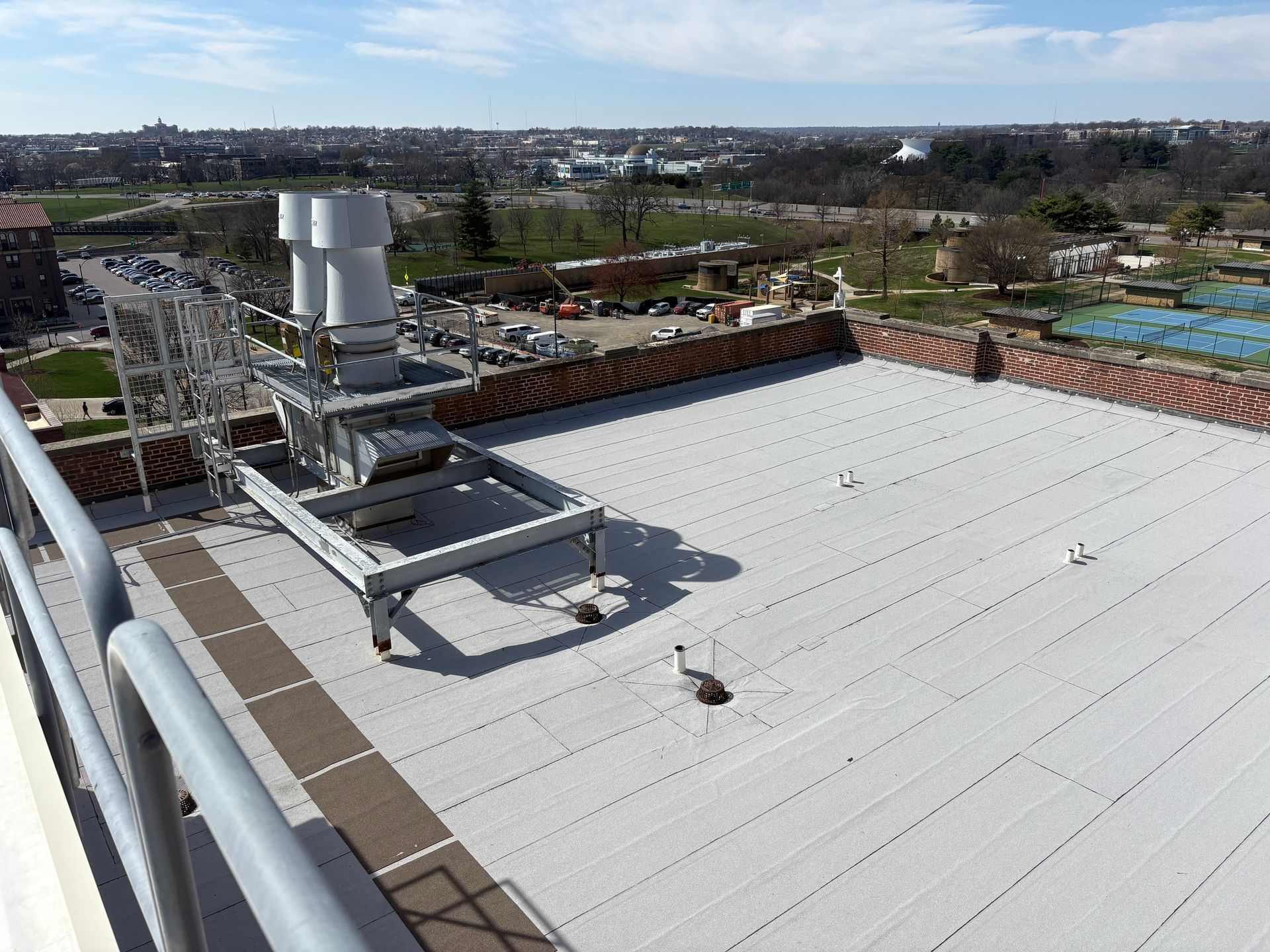
Commercial roofs are one of the most overlooked — yet most expensive — assets a business owns. In a climate like St. Louis, where roofs take a beating from winter freezes, spring storms, summer heat, and fall debris, proactive maintenance isn’t optional — it’s essential.
With February underway, now is the perfect time for business owners and property managers to assess winter damage and prepare their roofs for the storm season ahead. This 2026 checklist walks you through exactly what to inspect, when to inspect it, and how to avoid costly repairs or premature roof replacement.
Why Commercial Roofing Maintenance Matters
Regular commercial roof maintenance can:
- Extend roof lifespan by 5–10+ years
- Prevent leaks that disrupt operations
- Protect warranties and insurance eligibility
- Reduce emergency repair costs
- Improve energy efficiency and drainage
Many roof failures don’t happen suddenly — they develop slowly due to ignored warning signs.
February Focus: Post-Winter Roof Inspection (Critical)
Winter in the Midwest is brutal on commercial roofs. Before spring storms arrive, February inspections are key.
Checklist: Late Winter / Early Spring
- Inspect for freeze-thaw cracking or membrane splits
- Check flashing around HVAC units and penetrations
- Look for ponding water from ice dam damage
- Examine seams on TPO, EPDM, or modified bitumen roofs
- Clear drains, scuppers, and downspouts
- Check interior ceilings for moisture stains or bubbling
👉 Pro tip: Even small winter cracks can turn into major leaks during spring rain events.
Monthly Commercial Roof Maintenance Checklist
These are simple checks that can prevent big problems:
- Walk the roof (if safely accessible)
- Remove debris, branches, or trash
- Ensure drains are flowing freely
- Look for visible membrane damage
- Check for loose edge metal or flashing
- Monitor areas around rooftop equipment
Seasonal Maintenance Breakdown
Spring (March–May): Storm Readiness
- Inspect after heavy rain or wind events
- Reseal seams and flashing
- Repair minor punctures before leaks develop
- Confirm roof slope and drainage performance
Summer (June–August): Heat & UV Protection
- Look for membrane shrinkage or blistering
- Check reflective coatings for wear
- Inspect expansion joints
- Ensure rooftop equipment isn’t damaging the roof surface
Fall (September–November): Winter Prep
- Clear leaves and debris
- Reinforce flashing before freeze cycles
- Check insulation and moisture barriers
- Schedule professional inspection before snow season
Winter (December–February): Monitoring
- Watch for ice dam formation
- Address leaks immediately
- Avoid unnecessary foot traffic
- Schedule post-winter inspections early
Material-Specific Maintenance Tips
TPO Roofing
- Inspect welded seams annually
- Clean reflective surface to maintain energy efficiency
EPDM Roofing
- Watch for seam separation
- Check for punctures near HVAC units
Modified Bitumen
- Inspect granule loss
- Check flashing integrity after storms
Metal Roofing
- Tighten fasteners
- Inspect for rust or coating wear
- Check expansion points
Signs Your Commercial Roof Needs Immediate Attention
Call a professional if you notice:
- Active leaks or ceiling stains
- Standing water after 48 hours
- Cracked or loose flashing
- Rising energy bills
- Mold or mildew odors
- Sagging roof sections
Ignoring these signs can turn a manageable repair into a full roof replacement.
Professional Inspections: How Often Are They Needed?
- Minimum: Once per year
- Best practice: Twice per year (spring & fall)
- Always after: Major storms, hail, or high winds
A professional inspection documents roof condition, protects warranties, and helps with insurance claims if damage occurs.
Why Businesses Trust Taylor Roofing
Taylor Roofing has over a century of experience protecting commercial properties throughout the St. Louis metro area. Our team understands local weather patterns, roofing systems, and long-term maintenance strategies that keep businesses operational and protected.
We don’t just fix roofs — we help businesses plan ahead.
Final Thoughts: Start 2026 the Smart Way
February is the ideal time to:
- Catch winter damage early
- Prevent spring storm leaks
- Budget for maintenance instead of emergencies
- Extend the life of your commercial roof
A little attention now can save tens of thousands later.